

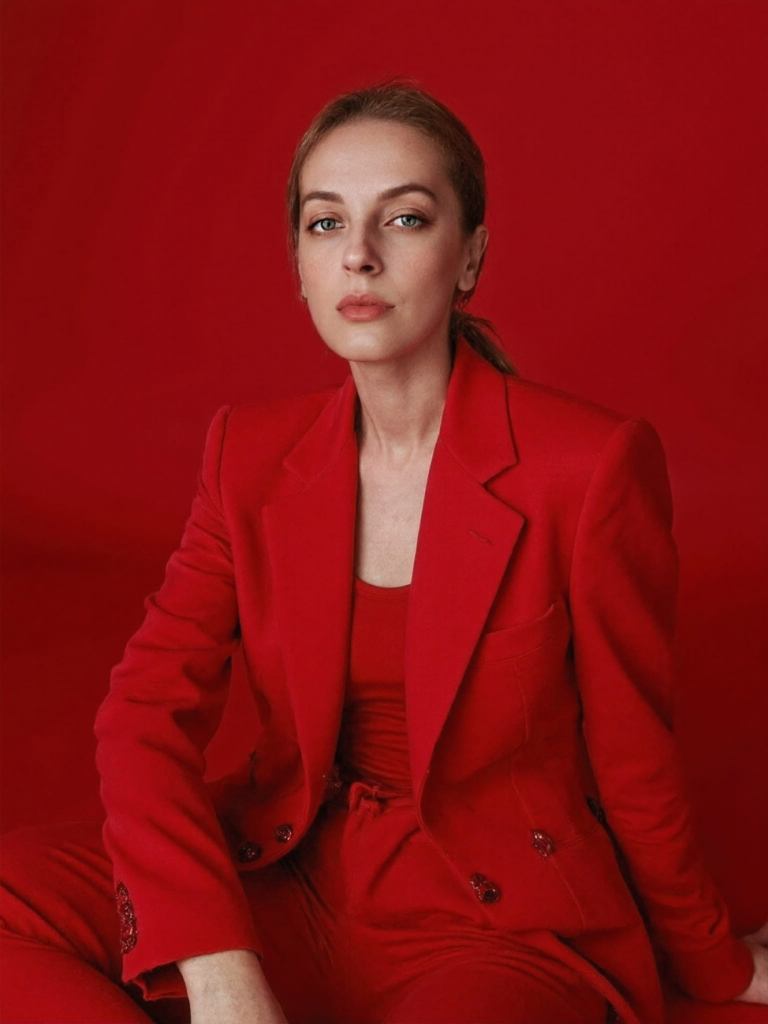
When is a series truly over?
When the end credits roll?
When the platform cues up the next recommendation? Or months later, in an entirely unexpected moment, when a song from that show plays and pulls us right back into the story?
The answer is almost certainly the last one.
Even in an intensely visual age, sound remains one of the most stubborn components of human memory. Today, series are no longer mere television broadcasts or streaming fodder. From the cast and wardrobe to the host city, featured props, social media spin-offs, and scores, they are cultural artifacts that cultivate their own economic ecosystems.
A hit series generates far more than raw viewership metrics. A city captures global curiosity. An actor’s wardrobe sparks retail searches. A filming location turns into a destination. A song is rediscovered. A musician ends up on the personal playlist of a listener halfway across the globe.
The narrative escapes the boundaries of the screen and enters circulation. This is precisely where the creative economy takes flight.
The Economics of a Scene
Picture a scene: two characters are talking. Perhaps they are parting ways, meeting for the first time, or simply staring at each other in silence. Beneath the dialogue, a score begins to swell.
Most of the time, we do not register the music consciously. Yet it dictates precisely how that scene will be remembered. Within minutes, the viewer reaches for their phone.
Shazam. Spotify. YouTube. TikTok. Instagram.
The emotion engineered in a single scene transforms into economic velocity within seconds. This makes soundtracks one of the most compelling intersections in creative industries.
Film and television provide musicians with global exposure; music gives stories emotional weight. Streaming platforms, social media, live tours, vinyl pressings, sync licensing, and brand partnerships follow. A single creative output fuels an array of adjacent creative sectors. It is no longer just a “soundtrack”—it is a full-fledged IP ecosystem.
Kate Bush Already Proved the Point
One of the sharpest examples of this phenomenon was the resurgence of Kate Bush’s Running Up That Hill, catalyzed by Stranger Things.
A track released in 1985 anchoring the emotional core of a show decades later was not merely a nostalgic flourish. An entirely new generation discovered Kate Bush. The song vaulted up global charts, streaming counts skyrocketed, and a 1980s cultural artifact was integrated back into the 2020s pop-culture economy.
The takeaway goes beyond a single track finding renewed success: the series rebooted the economic lifecycle of an existing cultural asset. Perhaps the defining trait of the creative economy is just that—creative work has no true expiration date. Matched with the right narrative, the past can instantly become the economic present. The soundtrack acts as an invisible screenwriter.
Yağız Oral and MIRA: What Happens to Music After the Story Ends?
This is where Yağız Oral enters the conversation. Oral’s creative approach treats the soundtrack not as background texture, but as an autonomous narrative force capable of standing on its own. The sonic vocabulary he builds between electronic and acoustic worlds does not merely prop up the story; it carries its atmosphere, its memory, and everything left unsaid. Viewing his work as just “music scored for a scene” misses the mark entirely.
The score for MIRA drives this inquiry forward: What does music composed for a story become once separated from it?
Examining the sonic landscape Oral crafted for MIRA reveals a question larger than composition alone. It explores how a soundtrack evolves into an independent piece of art, a standalone listening experience, and ultimately a circulating asset in the creative economy. Before discussing technical production, the real question is how far the voice of a story can travel.
Q: “Yağız, when you first read the script or saw the initial cuts of MIRA, what was the first sonic texture that came to mind? Does reading the text drive your composition, or are you listening for the rhythm hidden inside the characters’ silence?”
Yağız Oral: What struck me first about MIRA was the texture of the narrative and the quiet, mounting loneliness of the lead character. The path to the composition opened right there; the initial spark came straight from the story itself. The first sound echoing in my mind was an electric guitar arpeggio—one that could articulate that loneliness from a place both raw and intimate.
Q: “People often say every character in a score has their own ‘timbre.’ When capturing the emotional states in MIRA, which instruments or sonic textures did you rely on? For instance, did you create a signature sound for Mira’s internal journey?”
Yağız Oral: Every character in this production carries a distinct persona, offering a unique lens onto the story. To reflect their interior lives, I crafted a dedicated approach for each of them. Mira’s quiet solitude took shape through atmospheric electric guitar tones and layered arrangements. For Polat, I went in a simpler, more vulnerable direction, relying on a stripped-back piano theme. For the comedic beats running through the show, I moved away from familiar tropes and leaned into an American-style thematic language.
Q: “Sometimes the most powerful music is knowing how to use silence. How did you identify the moments in MIRA where the music needed to stop and let the atmosphere breathe? When scoring for streaming platforms, do you prefer driving pace through music or through negative space?”
Yağız Oral: Absolutely. I pay close attention to the deliberate use of silence across all my work. The emotional payoff of a musical cue is often decided by the stillness that precedes it. In MIRA, I mapped those moments by locking directly into the rhythm and emotional truth of the performance. Alongside our director, Meltem Bozoflu, we opted to leave the score out during peak emotional exchanges where the acting carried maximum weight. That restraint kept the narrative unpretentious, grounded, and driven by its own organic emotion.
Q: “Digital production offers limitless possibilities. Yet your work always feels tactile and organic. While scoring MIRA, how did you balance pristine digital tools with flawed, human emotion?”
Yağız Oral: Today, digital tools can simulate a live orchestra or acoustic instrument with astonishing fidelity. However, preventing that sound from turning sterile comes down to compositional philosophy and conscious instrumentation. Any piece written for the screen must hold up as a cohesive work of art beyond its functional duty in the scene. That balance depends on disciplined formal structure and melodies that pursue genuine, human warmth over mechanical, assembly-line polish.
Q: “Scores don’t just accompany scenes; they steer the audience’s psychology. Why do you think someone who watches MIRA can put on headphones later and remain fully immersed in that universe? If the music of Yağız Oral were an architectural space, which room would MIRA be?”
Yağız Oral: The score in MIRA maintains an intimate dialogue with the edit; it functions as an ongoing call-and-response with the performance on screen. That dynamic integrates the music with the narrative’s emotional arc until it becomes an independent character. The musical identity stands out most clearly during our dives into Mira’s internal world—especially her moments of utter bewilderment. It is a genuine collective effort.
If my body of work were a house, MIRA would be the room where you shut the door to confront yourself in total solitude. At its core, the series documents a character weathering disruption, evolving through it, and ultimately arriving at acceptance.
RU Ceylan
Multidisciplinary Artist / Creative Industries Expert