
Miami Broward Carnival’s decision to hold all of its main events in Broward County for the first time is more than a change of venue. It reveals how South Florida’s cultural center of gravity is expanding and how immigrant communities continue to reshape the region’s identity.
ARTTMODERNMIAMI CULTURE
September 2026
Miami Broward Carnival is marking its 42nd year with a significant shift. Considered one of North America’s largest Caribbean carnivals, the festival will hold its entire main program in Broward County for the first time, from October 3 through 11, 2026.
Although some events have long taken place in Broward, the grand parade and concert were previously held at the Miami-Dade County Fairgrounds or near Hard Rock Stadium. This year, the full program—from Junior Carnival and J’Ouvert to the costumed parade and closing concert—will be concentrated in Broward. Organizers point to the festival’s growing scale, the need for a better audience experience, and Broward’s strong Caribbean community.
But the real question is bigger than which park will host the festivities: Why is a major cultural festival that carries Miami in its name moving entirely beyond Miami’s borders?
More Than a Move
Miami has long been seen as South Florida’s international showcase. Art fairs, film festivals, fashion events, and major cultural gatherings are usually introduced to the world through the “Miami” brand. Yet the region’s real cultural map extends far beyond city limits.
Broward County is home to nearly 2 million people, and 36.9 percent of its residents were born outside the United States. Its demographic and cultural ties to Jamaica, Haiti, Trinidad and Tobago, Barbados, and other Caribbean nations are visible across public life—from music and food to costume design and everyday speech.
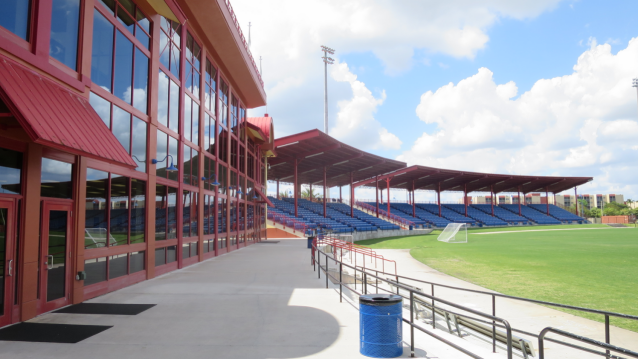
Central Broward Regional Park and Broward County Stadium in Lauderhill will host Miami Broward Carnival’s main 2026 events. Photo: Brian Crawford / Wikimedia Commons — CC BY 2.0.
Miami Broward Carnival’s move north does not mean the festival is abandoning its audience. On the contrary, it brings the event closer to the geographic center of the communities that carry this culture in everyday life.
The decision to keep “Miami” in the festival’s name also matters. Here, Miami represents more than one municipality; it is the larger cultural brand through which international audiences recognize South Florida. Broward is no longer simply a supporting backdrop to that brand. It has become one of the region’s primary centers for cultural programming and public participation.
Carnival Is a Memory Carried Through Migration
Miami Carnival’s history reaches back to Caribbean communities that settled in South Florida in the late 1970s and 1980s. The first Miami Carnival was staged in 1984 as a street parade in the area now known as Miami Gardens.
Broward Caribbean Carnival took place at various Broward County locations from 2003 through 2008. In 2009, the Miami and Broward organizations merged under the Miami-Broward One Carnival Host Committee. The continued presence of Kiddies Carnival in Broward shows that the county’s cultural role in the festival never truly disappeared.
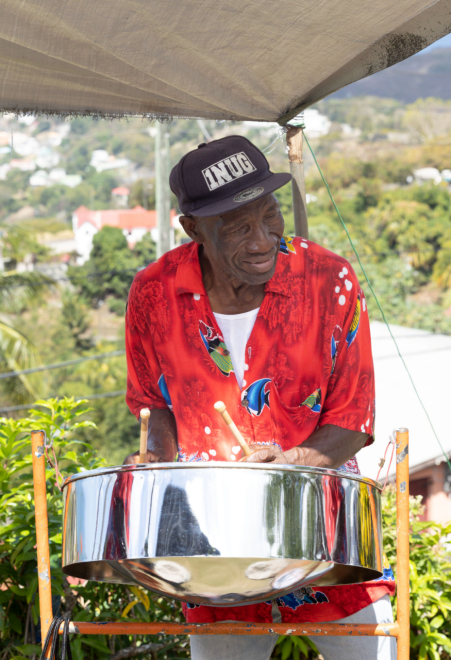
Steelpan is one of the defining sounds of Caribbean music and Carnival tradition. Representative photo: Sean P. Twomey / Pexels.
The 2026 decision is therefore less a departure than a formal recognition of Broward’s long-standing cultural weight.
Carnival is not simply entertainment or spectacle. For the Caribbean diaspora, costume, music, dance, and public space carry historical memory, the desire for freedom, and a sense of belonging. Past Miami Broward Carnival leaders have emphasized that Carnival moves with migrant communities and becomes a form of expression passed from one generation to the next.
The shift to Broward is therefore more than a logistical choice. It is culture following the community that keeps it alive.
Passing the Tradition to a New Generation
The festival’s youth program shows that Carnival is investing not only in today’s audience but also in the people who will carry the tradition forward. Junior Carnival introduces new generations to costume art, dance, steelpan music, and the culture of collective creation.
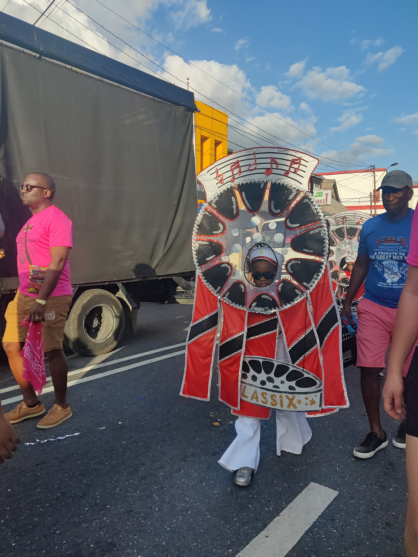
A child’s steelpan-inspired costume at Kiddies Carnival in Trinidad and Tobago, 2025. Representative archival photo: Marzepan1 / Wikimedia Commons — CC BY-SA 4.0.
This exchange shows that cultural identity in the diaspora is not only remembered; it is continually remade. The visibility of children onstage and in the parade is also a way for the community to build its own cultural continuity.
The Unseen Economy Behind the Costumes
Feathers, rhinestones, vivid fabrics, steel orchestras, soca rhythms, and dancers filling the streets are Carnival’s most visible elements. Behind that spectacle, however, is a creative production chain that takes months of work.
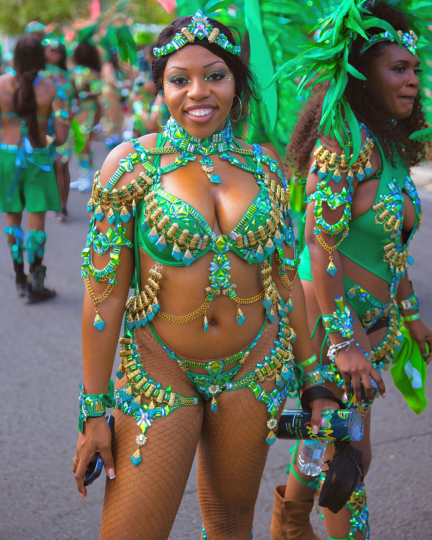
Carnival costumes are the result of months of collective work by designers, seamstresses, and mas band teams. Basseterre, St. Kitts and Nevis. Photo: Jermaine Lewis / Pexels.
Costume designers, mas band teams, seamstresses, musicians, choreographers, hair and makeup artists, food vendors, stage crews, and small businesses are the often-unseen participants in the Carnival economy. Bringing the main events together in one county may shift not only visitor traffic but also the economic activity generated by cultural production toward Broward.
That raises an important question: When a major cultural event arrives in a region, does the economic benefit truly reach local creative communities, or do corporate sponsors and tourism brands capture most of the visibility?
After the festival, success should be measured by more than attendance. It should also include how costume designers, artists, vendors, and small businesses were affected by the event’s new geography.
Is Broward the New Center?
The program begins October 3 at Tamarac Sports Complex with family-focused events featuring children and youth steelpan groups. Festival week accelerates on October 9, followed by J’Ouvert at Central Broward Park and Broward County Stadium on October 10. The October 11 finale is expected to bring together more than 16 mas bands for the grand parade, concert, food village, and cultural marketplace.
For several days, that schedule will transform Broward from an event site into a cultural center where costume, music, food, and the shared memory of the Caribbean diaspora converge.
Still, the story is not as simple as Miami losing cultural importance or Broward replacing it. South Florida has become too broad and layered to be understood through a single cultural center. Miami remains a powerful address for international visibility, while Broward is increasingly a center of community-based cultural production.
Perhaps the right question is not whether Miami or Broward is the new center of Caribbean culture.
The real question is this: Is a cultural center defined by the name of the city that markets it, or by the community that lives, creates, and passes it on every day?
Miami Broward Carnival’s 2026 journey offers a clear answer: Culture does not follow lines on a map. It follows people.
Sources and Image Licenses
• Miami Broward Carnival 2026 Program
• Axios Miami — Carnival’s Move to Broward
• U.S. Census Bureau QuickFacts — Broward County