

Poland’s Tricity – Gdańsk, Sopot, and Gdynia
Poland ranks at the very top among the countries that fascinate me with their history. As the place where World War II began and a country that has witnessed immense suffering, Poland keeps its history alive, taking its visitors on a true journey through time. On our European journey via Interrail, Poland—, which we visited after Lithuania—utterly captivated us with its history, nature, culture, and cuisine.
The first stop of our trip was the city of Gdańsk. Since there are no direct train services between Lithuania and Poland, we took an overnight bus and arrived at the bus station in the early hours of the morning. Unlike at other country borders we crossed, we were pulled over by the police upon leaving Lithuania and entering Poland; they boarded the bus to conduct identity checks. It was far too early to check into the hotel we had booked online. Therefore, we left our luggage in the station lockers, headed straight to the train station, and caught a train to Sopot. The distance was very short, and just 15 minutes later, we reached this charming town on the coast of the Baltic Sea. Sopot hosts the world-famous Sopot Music Festival, and you can see the influence of music and art almost everywhere. Together with Gdańsk and Gdynia, Sopot forms the “Tricity” region. The city is best known for its vibrant nightlife, health spas, and Europe’s longest wooden pier.
After arriving in Sopot, we walked from the train station toward the coastal area. Along the way, we saw buildings with very unusual and fascinating architecture. After touring the inside of St. George’s Church, we noticed a statue of a bear decorated with a red-and-white Polish flag in its backyard. Born in Syria and a member of the Polish army during World War II, this bear’s name was Wojtek. Traveling alongside the 22nd Artillery Supply Company, marching and wrestling with the soldiers, and even carrying ammunition during battles, Wojtek was officially given the rank of corporal. The unit’s official emblem was even changed to depict a bear carrying an artillery shell.
Following our visit to this fascinating statue, we continued our walk. There was a long coastline, and we dipped our feet into the Baltic Sea at the public beaches. We saw a small carousel and a mini open-air market. The surrounding area featured historic hotels and restaurants, among which the Grand Hotel was truly worth seeing.
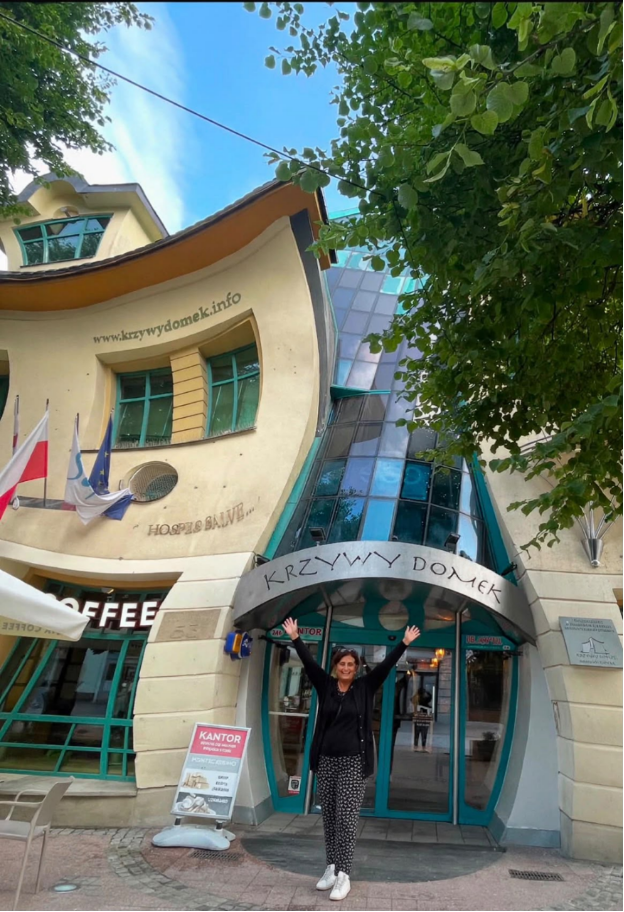
Krzywy Domek( Crooked House ), Sopot / Poland
The building that caught our attention most in the market area was Krzywy Domek (The Crooked House). Standing out with its fairytale-like, melting appearance, this structure was located on Bohaterów Monte Cassino, Sopot’s most popular and bustling street. Housing cafes, restaurants, and offices, this building was actually not an optical illusion; it was built with a unique architectural design. We also visited Sopot Molo, the 511-meter-long wooden pier, one of Sopot’s must-see attractions and the longest wooden pier in Europe. Walking on this pier, which requires an entry fee, made us feel as if we were walking right on top of the sea.
During our visit, the Polish currency, the Złoty, was valued at around 8.50 TL; that meant we multiplied everything by eight and a half to convert it to Turkish lira. By the way, we rarely needed to exchange cash in most of the countries we visited, as we always used credit cards. However, I highly recommend getting a small amount of cash in złoty as soon as you arrive in Poland. This is because some grocery stores and especially paid public restrooms do not accept euros, dollars, or any other foreign currency. Since they do not accept credit cards either, you need to have some cash in złoty on hand; this situation can become a major issue, especially when you need to use the restroom.
From Sopot, we took a train to the famous Malbork Castle (Zamek w Malborku), a magnificent structure built in the 13th century and now protected as a UNESCO World Heritage Site. After getting off the train, you need to take a short walk to reach the castle. Getting an up-close look at this magnificent structure—the largest castle in the world by land area and the world’s largest Gothic brick structure—was a truly spectacular experience. Inside, there were massive dining halls, knight quarters, secret passages, ancient weapon collections, and eye-catching Baltic amber exhibitions. There were quite long queues at the entrance of this majestic castle, which takes at least three to four hours to explore. Later, on the train back to Gdańsk, I tried Gołąbki, a traditional Polish dish that closely resembles our stuffed cabbage rolls (lahana dolması), and I absolutely loved it. Shortly after, we arrived back in Gdańsk.
The Old Town region, called “Stare Miasto” in Polish, instantly drew our attention with its magnificent, colorful buildings and was the first place we visited in the city. As you know, historic centers called “Old Towns” in Europe serve as economic and tourist hubs where the cultural fabric is meticulously preserved. Gdańsk, which was almost completely destroyed during World War II, rose from its ashes and was rebuilt as faithfully as possible to its original form.
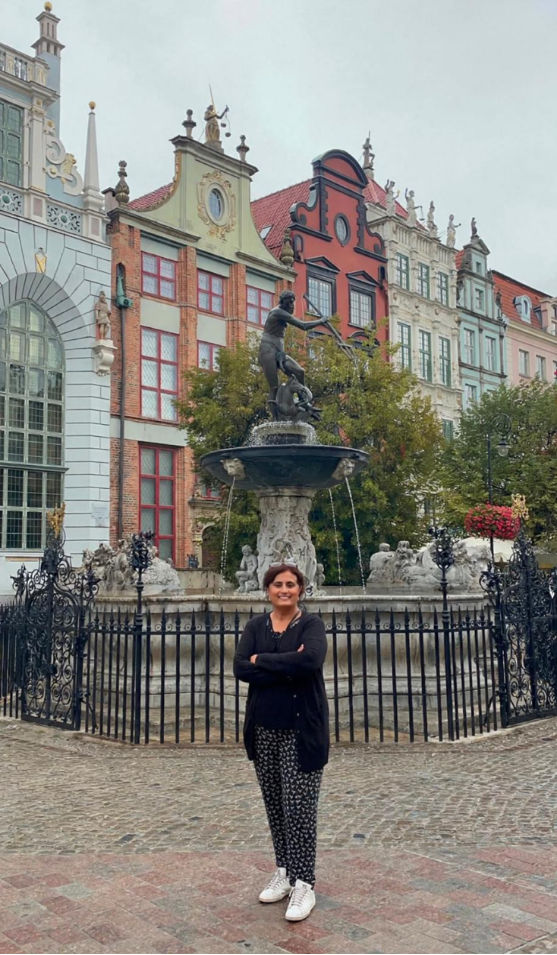
Fontanna Neptuna (Neptune’s Fountain), Gdansk
We witnessed these wonderful sights firsthand by wandering through the main streets and squares. We walked along Długa Street, also known as the Royal Route, the beating heart of the city; we saw beautifully decorated historic houses, restaurants, and cafes lined up side by side. The 17th-century bronze statue of the sea god located in Długi Targ Square also caught our interest. Gdańsk’s most famous symbol, the Neptune Fountain (Fontanna Neptuna), was stunningly beautiful and left onlookers in awe.
Next, we climbed the massive 78-meter tower of St. Mary’s Church (Bazylika Mariacka), one of the largest brick churches in the world. Looking out at the stunning view of the Old Town from the very top was, quite literally, magnificent. We also saw Żuraw, one of the city’s iconic structures, known as the largest port crane of medieval Europe. Meaning “crane bird” in Polish, Żuraw was built in the 15th century and operated by human power. It is currently part of the National Maritime Museum. We continued our tour by strolling down Mariacka Street, the city’s most romantic and aesthetically charming street, famous for its unique terraced stone porches, dim street lamps, and shops selling amber and jewelry.
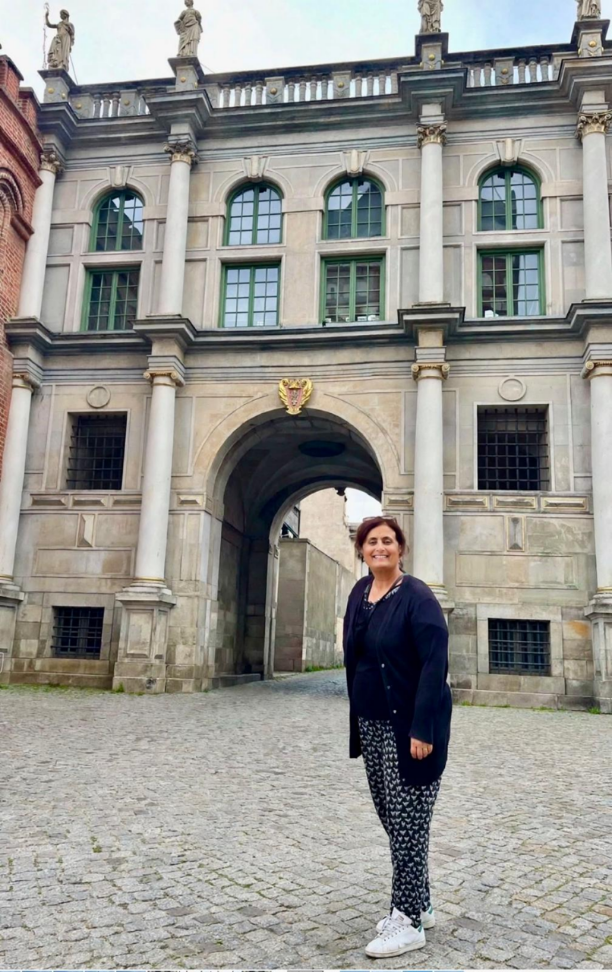
Złota Brama ( The golden Gate ), Gdansk
The Golden Gate (Złota Brama) and the Green Gate (Brama Zielona), which symbolize the historical entrances and exits of the city, impressed us deeply. Listening to street musicians while walking through the Long Market and breathing in the lively atmosphere of the city was wonderful. The Artus Court Museum, the Golden House, the Main Town Hall, the Upland Gate, and the Torture House were also among the places well worth seeing.
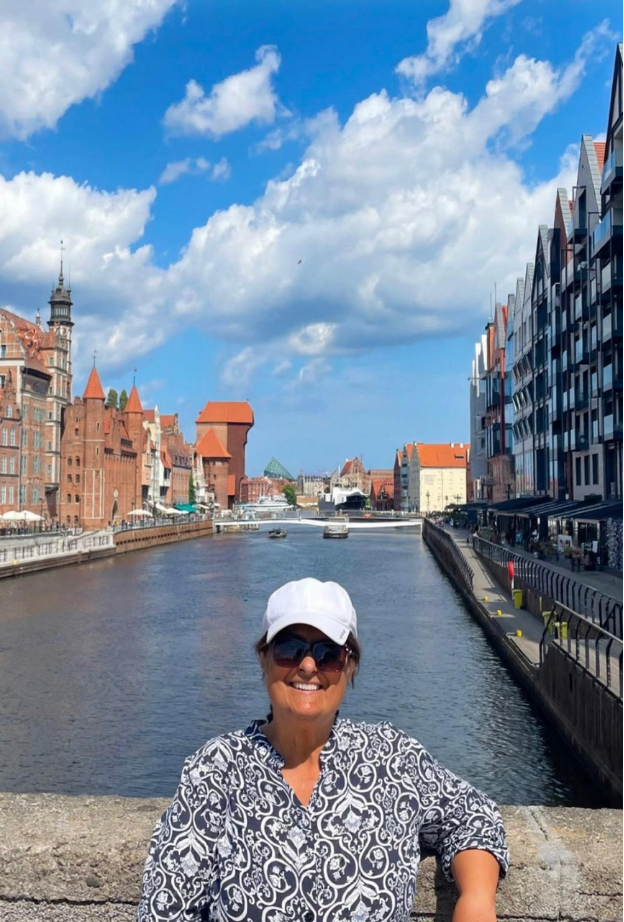
Motlawa River, Gdansk
The city was built on both banks of the Motława River. There were two important movable pedestrian bridges on the river that opened at specific intervals to allow pedestrians and boats to pass. One of these, the Ołowianka Pedestrian Bridge, operated by mechanically lifting its middle section upward. The Kładka Grzegorza Bridge, on the other hand, did not lift vertically but swung sideways around its own axis, which is why it was called the “swing bridge.” A large crowd would gather to watch this moment during the scheduled times of the day when the bridge closed to pedestrian traffic and swung open. In the evening, after the sun went down, we walked toward the AmberSky Ferris Wheel (Koło Widokowe) on Ołowianka Island, which features a giant “Gdańsk” sign, and got a close look at this popular 50-meter-high tourist attraction. For families with children, I also highly recommend visiting Majaland Gdańsk, the city’s newest and largest themed amusement park.
Following our tour, we headed to our boutique hotel, Via Steso, which resembled an old house and consisted of just a few rooms, where we spent the night. The next morning, we had a Polish-style breakfast at the hotel. I can list the foods included in this breakfast as follows: Kanapka (an open-faced sandwich), Jajecznica (Polish-style scrambled eggs cooked in a pan with diced sausage), Twaróg (curd/cottage cheese), and parówki (small sausages served with mustard or ketchup).
After breakfast, we used Uber for a fast and comfortable ride to Westerplatte. Entry to the Westerplatte Peninsula, known as the place where World War II began, and its open-air museum area was entirely free. Right at the entrance, historical information was displayed on massive panels in a large open-air exhibition. We toured the Monument to the Coast Defenders, the barracks ruins, and the military cemetery free of charge. If you wish, you can also visit the Elektrownia (the Old Power Station) for 15 złoty, and Guardhouse No. 1 (Wartownia nr 1) for 8 złoty.
Westerplatte, which was formed in the 19th century by sand brought by the Vistula River and initially established as a health resort and a popular holiday destination and leisure resort, has hosted many historically significant events. The most crucial of these took place on September 1, 1939, marking the beginning of World War II. Under the pretext of a friendly visit to Poland, a German battleship docked at the harbor and subsequently shelled the Polish military base at Westerplatte with its massive guns. In response, Polish soldiers defended the post for seven days. Under normal circumstances, they were expected to hold out for only 24 hours; yet, their defense against 3,000 German soldiers, tanks, and relentless bombardments by Nazi aircraft—surrendering only when they completely ran out of ammunition—stands as a remarkable example of historical resistance. Between 1939 and 1945, the Nazis established a concentration camp for Polish prisoners here, and Adolf Hitler himself even visited the site. Following the war, in 1966, the massive 25-meter-high, Monument to the Coast Defenders was erected in this area to symbolize the war and the resistance.
The pathway leading up to the Monument to the Coast Defenders (Pomnik Obrońców Wybrzeża) was incredibly peaceful and lush with greenery, lined on both sides by dense trees. Upon reaching the hilltop, we got an up-close look at the 25-meter-high monument, which is made up of 236 granite blocks. Its shape, reminiscent of a bayonet driven into the ground, symbolized a powerful defense that refused to take a step back. The relief figures carved onto the monument depicted a Polish soldier and a sailor. The military cemetery was built directly on top of Guardhouse No. 5, which had been completely leveled by German bombardments during the opening days of the war, burying the Polish soldiers who lost their lives inside. Walking through it was a deeply moving experience. We left this historic area having once again grasped Poland’s immense historical significance during World War II.
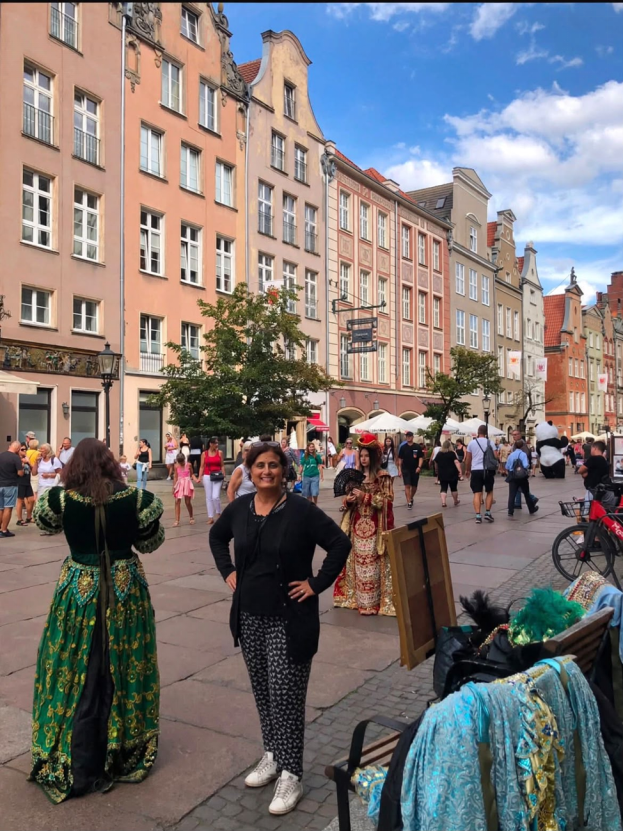
Dluga Targ ( Long Market ), Gdansk
This time, we returned to the city by public bus and continued our tour of Gdańsk’s Old Town center. We thoroughly enjoyed walking through the Long Market (Długi Targ) and exploring the open-air market there. Seeing the Turkish flag and our traditional food among the stalls selling diverse international cuisines filled us with great pride. I tried Poland’s famous pierogi, but I must say that our Turkish mantı is vastly superior in flavor. On the other hand, the homemade lemonade (Lemoniada), which paired beautifully with the dumplings, was perfectly suited to my taste. Listening to street musicians dressed in national attire and watching the bridge over the Motława River swing open added a completely different charm to the trip.
For dinner, we ate at Restauracja Dominikańska. Giant potato pancakes with goulash (Placek po cygańsku), Polish dumplings filled with potato and cheese (Pierogi Ruskie), stuffed beef rolls, beetroot soup (Barszcz), and tomato soup are among the most popular dishes here. On top of that, their prices are highly reasonable compared to other establishments in the Old Town center. We visited the branch located on Garbary Street; however, if you are looking to enjoy seafood, I also highly recommend visiting Tawerna Dominikańska, located right at the fish market by the riverbank.
Later on, I parted ways with my friends and took a train by myself to Gdynia, thereby completing the famous Tricity. This region, formed by the cities of Gdańsk, Sopot, and Gdynia, is known in Poland as “Trójmiasto” (Tricity). Lined up side by side along the Baltic Sea coast, these three cities possess completely different characters, architectural styles, and distinctive atmospheres, despite being so close to one another. SKM suburban trains easily provide transportation between the cities. While Gdańsk stands as the hub of history and culture and Sopot serves as the center for entertainment and summer leisure, Gdynia is renowned for its 1920s modernist architecture and maritime heritage. The Open’er Music Festival, the city aquarium, maritime museums, and the Southern Pier are all absolutely among the top must-see places in the city.
With that, I have shared my memories of the first three cities I explored in Poland. I eagerly look forward to you reading my upcoming posts about the other cities and sharing your valuable comments with me!
Canan Sezgin
Instagram: @cansez2013