
Independent Cinema’s Struggle for Visibility in Venice
A film’s international journey is shaped by more than the story it tells. Media attention, cultural partnerships, and visibility gained at the right moment can also determine the future of independent cinema.
The 83rd Venice International Film Festival brings the global film community back to the Lido from September 2 through 12, 2026. La Biennale di Venezia defines the festival’s mission as promoting international cinema in all its forms; as art, entertainment, and industry. Those three words also explain why Venice is much more than a place where films are screened.
Cinema in Venice does not exist only on the screen.
Press conferences, private screenings, invitations, brand partnerships, photo calls, and red-carpet appearances create a second narrative; one that can influence how films are perceived internationally. Major productions enter this visibility system with established distribution networks, recognizable stars, and substantial publicity budgets. Independent films must navigate it far more carefully.
For independent cinema, visibility is not a decorative luxury. It can be essential to a film’s survival.
A short film’s ability to attract press coverage, reach the right festival programmer, screen in another country, or develop into a larger project may depend on a handful of meaningful encounters. Media organizations, cultural platforms, and independent sponsors therefore represent more than logos on promotional materials. At their best, they become cultural bridges that allow a film to travel beyond the community in which it was created.
Tutte o Nessuna: From a Personal Struggle to a Social Question
Among the independent productions arriving in Venice during this year’s festival period is the Italian short film Tutte o Nessuna.
Starring Donatella Finocchiaro, Violante Placido, and Filippo Librando, with a special appearance by William Baldwin, the film addresses the difficulties surrounding access to breast cancer treatment and the pressure that bureaucracy can place on people’s lives. In doing so, it transforms an intimate health struggle into a broader question of social justice.
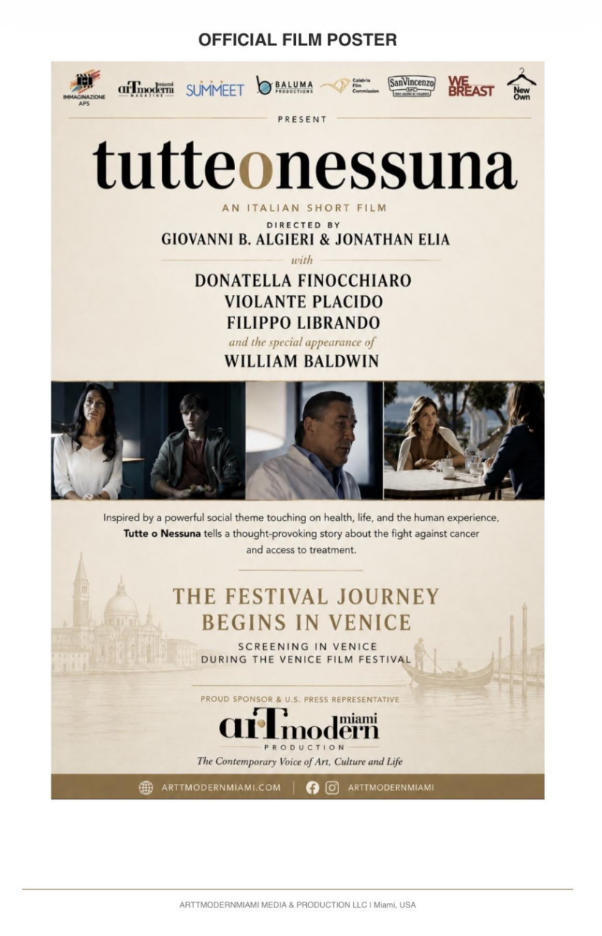
A private press presentation and preview will take place on September 10 at Spazio Incontri inside Hotel Excelsior.
ARTTMODERNMIAMI is supporting the film’s international communications journey as one of its media sponsors and United States press representatives.
The collaboration also reflects the evolving role of cultural publishing. A culture publication no longer has to remain merely an outside observer evaluating a work after it has been completed. While protecting its editorial independence, it can also help emerging talent, socially relevant stories, and creative relationships across borders gain meaningful visibility.
There is, however, an important balance to maintain. Cultural journalism must be able to support a project without surrendering to promotional language and it must keep the boundary between collaboration and critical distance transparent.
Who Is Visibility For?
The red carpet is often presented as cinema’s most glamorous surface. Behind those few minutes of images, however, are months or years of production, fundraising, creative negotiations, international relationships, and the struggle to bring a film before an audience.
The larger question may not be who walks the red carpet, but who is able to reach it.
Which stories are allowed into the frame?
Which films receive the attention of the press?
How many independent productions disappear because they lack access to the right networks?
In its follow-up report from Venice, ARTTMODERNMIAMI Gazette will look beyond the festival’s visible glamour and examine the system of access surrounding it. We will explore how independent productions engage with the press, what cultural sponsorship can genuinely accomplish, how invitation and access structures operate, and how smaller films attempt to claim space on the international stage.

Because sometimes the future of a film is determined not only by the story it tells, but by who helps carry that story to a place where the world can hear it.
By Tuğba Yazıcı — ARTTMODERNMIAMI Gazette
ARTTMODERNMIAMI GAZETTE
-The Contemporary Voice Art, Culture and Life-