

Gives an Object Its True Value: Skill, Thought, or Originality?

Murat Mete Agyar
Dear Readers,
Today, I would like to explore three important concepts that are often used interchangeably: craft, design, and art.
Although these three disciplines frequently appear intertwined in everyday life, each is founded on a distinct philosophy of creation, a different way of thinking, and a unique purpose. While they all involve the act of making, the motivation behind their creation and the methods they employ are fundamentally different.
Craft: The Aesthetics of Mastery and Repetition
Craft is a form of production rooted in knowledge, experience, and manual skill. Traditionally, it is learned through the master-apprentice relationship and refined through years of practice.
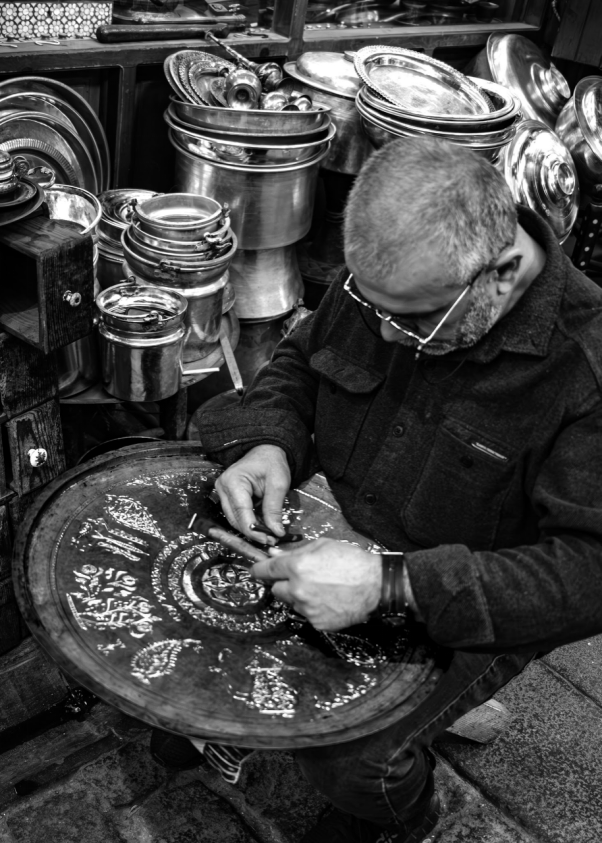
Stone carving, copper engraving, woodworking, glassmaking, leatherworking, ceramics, hairstyling, and saddle making are all examples of craftsmanship. The primary goal of the craftsperson is to create functional, high-quality objects with consistency. A master coppersmith’s fiftieth plate should demonstrate the same level of excellence as the first. In craftsmanship, mastery is measured by the ability to reproduce exceptional quality over time.
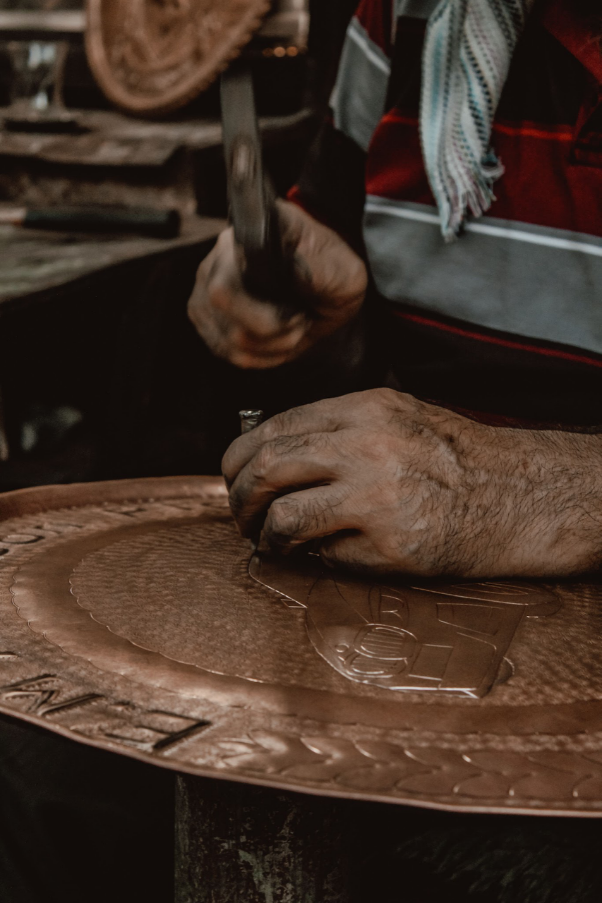
Here, value lies in repeatable excellence
Design: The Bridge Between Thought and Production
Design occupies a creative space between craft and art.
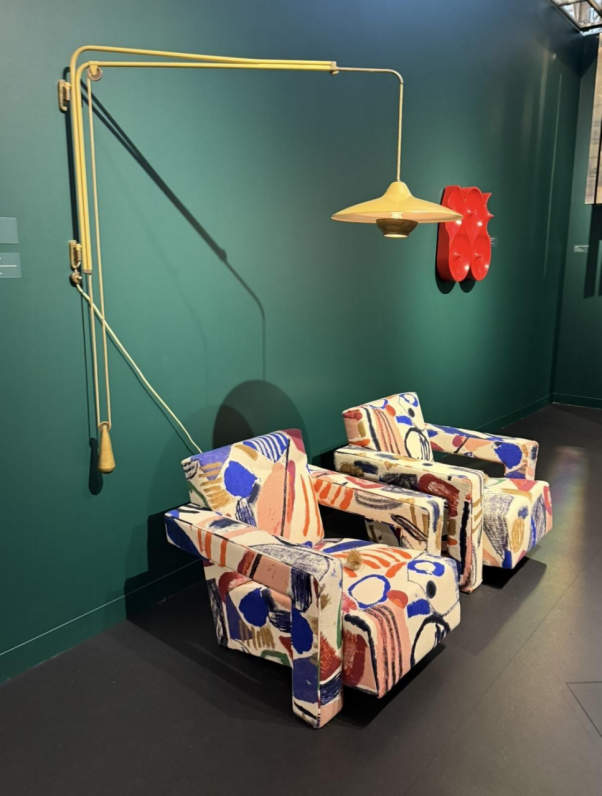
From Design Miami/ December 2025
A designer considers not only how an object will look, but also how it will function, what problem it will solve, and how people will interact with it. Form, ergonomics, materials, color, and functionality are all evaluated together.

From Design Miami/ December 2025
A design may remain a unique prototype or be intended for mass production. For this reason, design is the discipline where aesthetics and functionality achieve balance.

One of the most influential movements in this field was the Bauhaus School, which emerged in the early twentieth century. By redefining the relationship between art and design, Bauhaus continues to shape contemporary design philosophy to this day.
Art: Making the Invisible Visible
Art is far more than the creation of an object. It is the transformation of thought into form.

From Miami Art Basel/ December 2025
An artist brings not only technical skill but also imagination, inquiry, personal experience, and a unique perspective on the world into every work. For this reason, the value of a work of art lies not merely in its craftsmanship, but in the ideas it communicates and the originality of its interpretation.

From Miami Art Basel/ December 2025
The artist’s goal is not to reproduce the same object repeatedly, but to open a new space for expression with every creation. Contemporary art includes many reproducible forms; such as printmaking, photography, video art, digital media, and limited editions. Yet even in these cases, what defines the artwork is not physical repetition, but the originality of the artist’s vision and creative intent.

A Historical Example: Michelangelo
Michelangelo stands as one of the finest examples of this distinction.
He worked marble using many of the same tools employed by master stone carvers. Yet what made him an artist was not simply his ability to carve stone. Before beginning each sculpture, he devoted himself to extensive research, studied different varieties of marble, produced countless sketches, and transformed each work into a unique expression of thought. Some of his later sculptures deliberately appear unfinished, suggesting that what is left unsaid can sometimes communicate more powerfully than what is fully revealed. It is precisely here that the essential distinction between craft and art begins.
From Stone Masonry to the Present Day
Throughout history, stone masons laid the foundations of civilizations by constructing castles, temples, mosques, churches, and palaces. Although construction techniques evolved with the introduction of iron and later reinforced concrete, the essence of craftsmanship has remained unchanged.
Today, woodworkers, blacksmiths, glassmakers, and leather artisans continue to uphold this tradition of mastery. Artists, however, do more than shape these materials; they transform them into vessels of thought and meaning.
Conclusion
Craft, design, and art are not isolated disciplines. Rather, they continually inspire and enrich one another.
Without craftsmanship, there can be no strong technical foundation.��
Without design, aesthetics and functionality cannot achieve harmony.��
Without art, production cannot transcend utility to engage the human mind and imagination.��
Perhaps the wisest approach is not to place these disciplines in opposition, but to recognize the unique value each contributes to the creative process.
The distinction can be summarized in three simple statements:
- The craftsperson demonstrates mastery through repeatable excellence.��
- The designer brings together thought, functionality, and aesthetics.��
- The artist reinterprets the world through a unique perspective, creating a new language of expression with every work.��
With my sincere respect and best regards,
Murat Mete Agyar