
A song played millions of times has not necessarily been heard by millions of people. A new U.S. inquiry shows why protecting music royalties also requires scrutiny of how revenue is shared and whether the underlying data can be trusted.
ARTTMODERNMİAMİ KÜLTÜR
October 18, 2026
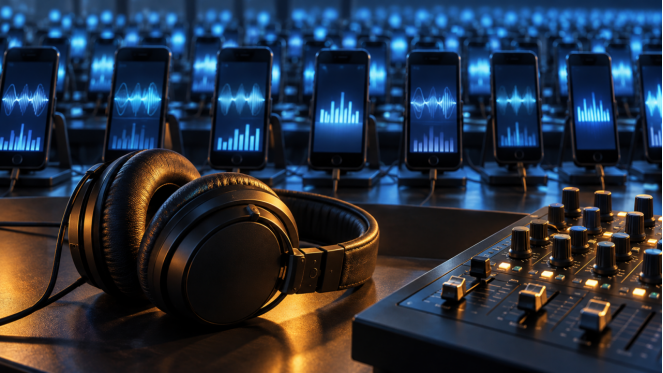
A song plays. Then again, and again. The number on the screen keeps climbing, but behind it there may be no listeners discovering the track, falling in love with it, and choosing to hear it once more. Sometimes what is growing is not an audience, but artificial traffic generated by automated accounts.
That distinction reaches all the way to an artist’s bank account. When fake streams enter the payment calculation, they can take a share of royalties that would otherwise go to music with genuine listeners. Even a musician who owns their work can lose part of its economic return through manipulation of the distribution system.
On October 7, 2026, the U.S. Copyright Office published a notice seeking public input on music streaming fraud. Responding to a congressional request, the Office is examining its prevalence, effects, and possible solutions. This is neither a criminal investigation into a particular company nor a new regulation that has taken effect. The process is still at the stage of considering what measures may be needed. [1]
The rights are yours but who gets paid
Copyright often brings to mind an unauthorized photograph, a copied song, or a text stripped of its author’s name. Streaming fraud exposes a different problem: ownership may be correctly recorded while the data used to calculate payment is wrong.
Spotify does not describe its payment model as a fixed fee for each stream. Revenue allocated to rights holders is calculated according to their share of streams on the platform. What ultimately reaches an artist also depends on agreements with rights holders and distributors. Multiplying a public stream count by a single rate will therefore not tell you what an artist earned. [2]
Consider a simplified example. If fake streams are counted in a particular royalty pool, the share they receive can reduce the amount available for legitimate listening. What shrinks is the legitimate rights holders’ share, rather than necessarily the size of the pool itself. This does not mean every platform and license works identically; it illustrates how fraud can distort revenue sharing.
AI music and streaming fraud are different questions
The official notice examines methods ranging from bot farms and human-operated click farms to playlists receiving bot traffic and compromised accounts. Claiming someone else’s work, or presenting an altered copy as an original recording, can add a separate copyright dimension. Who owns a recording and whether anyone actually listened to it are different questions. [1]
We should therefore avoid treating every AI-generated track as fraudulent, or every human-made track as trustworthy. Content produced without infringing copyright can still have manipulated listening figures. Conversely, an audience of real people does not erase any unauthorized use involved in making a work.
In an article published on May 27, 2025, WIPO Magazine, the publication of the World Intellectual Property Organization, described how generative AI makes it easier to produce large catalogs and spread artificial streams across them. The method is not new; the growing scale of production can make it harder to detect. [3]
The systems that detect fraud need accountability too
Platforms are already taking action. Spotify says it can withhold associated royalties and correct public figures when artificial streaming is confirmed. Data in an artist’s private dashboard and publicly displayed numbers may not always be updated at the same time. That is another reason a single screenshot cannot serve as sufficient evidence of earnings or success. [4]
How a decision is explained to an artist matters as much as the detection system. Can the artist understand which recording and payment period a deduction concerns? What evidence can they use to challenge a finding they believe is wrong? If anti-fraud measures become a system in which smaller creators cannot get an explanation, the trust problem simply reappears elsewhere.
These are accountability standards proposed by this article. The U.S. request for comments matters because it opens discussion of voluntary measures alongside legislative and regulatory options. Initial comments are due by 11:59 p.m. Eastern Time on November 23, 2026, and reply comments by 11:59 p.m. Eastern Time on December 21, 2026. Submission instructions are available on the Office’s official website. [5]
When numbers shape cultural decisions
Music’s payment system cannot simply be mapped onto film, visual art, or cultural publishing. We can, however, ask a related editorial question: When a film’s views, an artist’s followers, or an article’s traffic is used as a measure of success, how transparent is the source of that data?
The implication for culture is this: If a number helps justify an interview invitation, a sponsorship choice, or a programming decision, its accuracy should be open to scrutiny. High reach alone does not establish quality, and low reach does not erase a work’s cultural value.
For ARTTMODERNMIAMI, reporting on copyright involves more than putting the right name beneath a work. It also means asking what data determines the return on creative labor. Alongside protecting an artist’s work, we should discuss how to prevent the revenue and visibility it generates from being redirected through fake numbers.
How many people listen to a song matters. How that number was produced matters just as much.
Sources
[1] Federal Register — Music Streaming Fraud, October 7, 2026
[2] Spotify for Artists — Royalties Guide
[3] WIPO Magazine — AI and streaming farms, Clovis McEvoy, May 27, 2025
[4] Spotify — Artificial streaming and third-party services that guarantee streams
[5] U.S. Copyright Office — Official inquiry and comment submission page
Sources checked October 18, 2026. This article combines verified developments with editorial analysis and does not provide individualized legal advice.
Cover image: Created with AI for ARTTMODERNMIAMI. Conceptual illustration; not a photograph of an actual operation.