
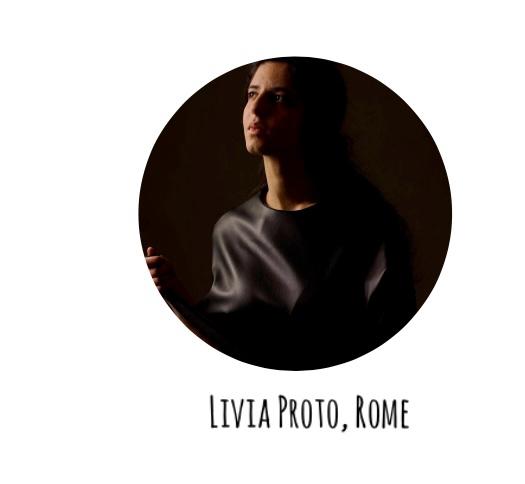
I wish everyone a happy New Year. I’m Livia Oya Proto, writing to you from Rome. Our topic today is cinema and culture…
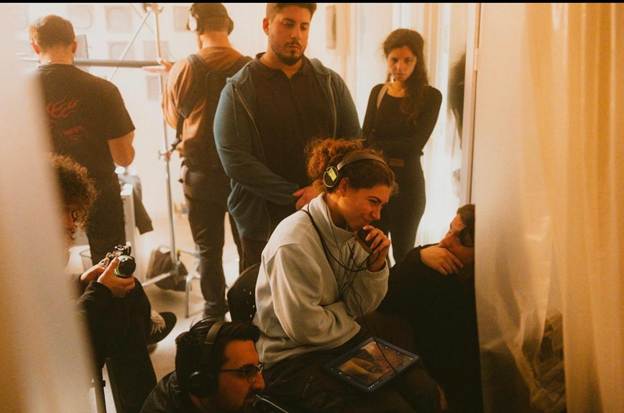
Today’s guests are two highly talented filmmakers living in Rome who are making a strong impression in the world of cinema: Riccardo Orazzini and Danilo Amato, directors and creators of the short film Debugging.
Runner Film produced the film…
Production (https://www.instagram.com/runnerfilm.production/) and Pallocci Bros, with Davide Pallocci as the producer and one of the screenwriters, and co-producer Federico Pallocci. I also collaborated on Debugging as the First Assistant Director (1st AD).
Starring Roberto Scorza and Barbara Monetti as the main stars along with Camilla Sanità, Debugging was created during the 48 Hour Film Project Italia, an international film competition that challenges filmmakers to write, shoot, and edit a short film in just 48 hours. Teams work under strict creative constraints such as a specific genre, a character, and a mandatory line of dialogue**,** pushing them to combine speed, teamwork, and artistic vision. In Italy, the project is promoted by the Roma Capitale Department of Culture and is a winner of the biennial public call “Culture in Movimento 2023–2024,” curated by the Department of Cultural Activities, in collaboration with LEA and SIAE.
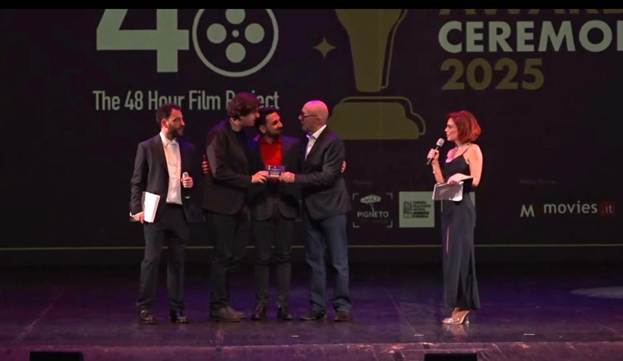
Among 147 competing projects, Debugging stood out, earning the award for Best Directing. Two-time Academy Award winner Paul Haggis presented the prize on stage. This short film was made thanks to the strength of an extraordinary team and a truly powerful collective creative effort.
Debugging was shot at La Casa Dei Giovani, an association that promotes and gives a voice to young people in Rome under the name “Cassandra”
(https://www.instagram.com/cassandra.associazione/).
Debugging is currently available for streaming on MyMovies:
https://www.mymovies.it/one/movie/18999-debugging/
In addition, on YouTube:
We spoke with the directors about how they first entered the world of cinema, their sources of inspiration, the intense creative process behind Debugging, and their upcoming projects. For film lovers, we asked every question worth asking. Now, let’s get to know these two creative minds a little better.
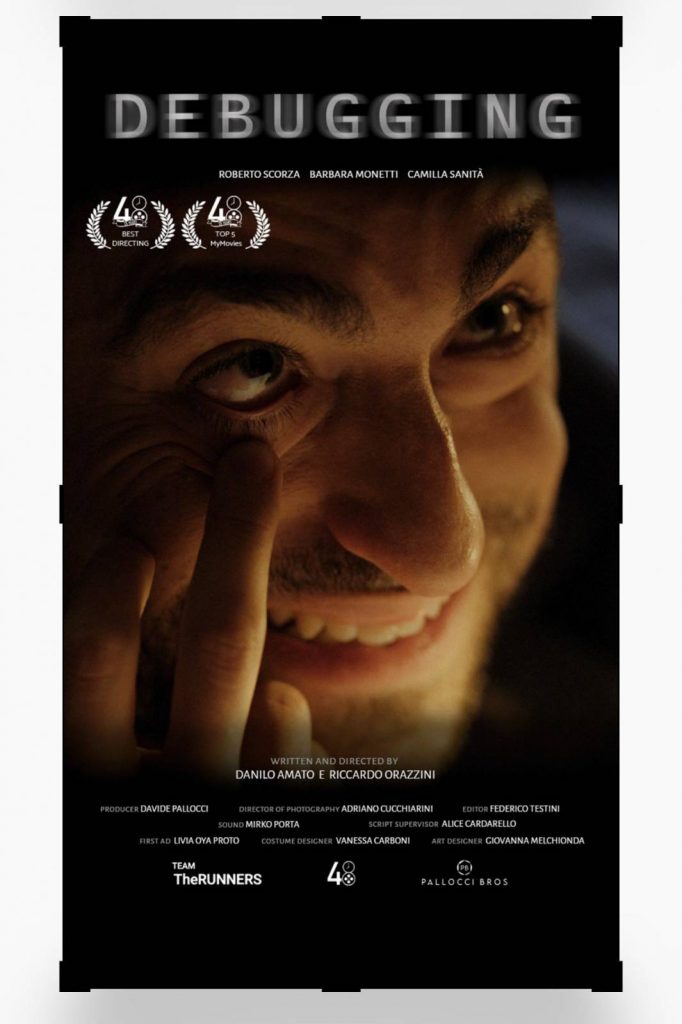

The Runners – DEBUGGING | The 48HFP Rome 2025
1. Could you tell us a bit about yourself? What is your name, and where do you live? How did cinema enter your life? How did you get started?
We are Danilo Amato and Riccardo Orazzini: one from Calabria and the other from Tuscany, both of us living in Rome for several years now. Cinema came into our lives in a very practical way, starting from the ground up, learning the craft on set and growing day by day through hands-on experience. The name we gave to this new venture, Runner Film, and therefore to the team that took part in the festival, “The Runners,” comes exactly from that beginning. Early on, together with Davide Pallocci, we worked as runners, the last link in the chain of a film crew, often underestimated yet essential. It was our first real encounter with the working world of cinema, made of effort, attention, and learning by watching others. That’s where it all started.
2. How was your experience at the 48 Hour Film Festival as both director and screenwriter?
For both of us, it was the third time taking part in this competition, but the first time in the role of directors. It was a very stimulating experience and, at the same time, extremely educational from a cinematic point of view. Co-directing is not easy, especially when different visions naturally emerge, but in this case, we were able to quickly find a strong balance and a very productive sense of collaboration. The same was true during the writing process, which was made even smoother and more effective thanks to Davide’s support.
3. What were the main challenges you faced during the 48-hour film shoot?
The main difficulties we faced were during the writing phase. The mandatory elements and genres we had to follow according to the rules created a sense of confusion in the first few hours, which, combined with the pressure of having to work fast, really put us to the test. Fortunately, a healthy and constructive team effort helped us agree on the direction we wanted to take and allowed us to establish, already at the scriptwriting stage and together with our DoP Adriano Cucchiarini, a directorial approach that was suited to the story and truly effective. Once all the pieces came together, everything that followed on set happened in a very natural way.
4. What is the film Debugging about?
Despite its central theme being Artificial Intelligence and its science-fiction nature, we believe that Debugging is, first and foremost, a film about human beings — about their fears and their desire to be not so much free, but uncorrupted. It explores the search for, and perhaps the achievement of, a state in which one is no longer influenced by the world, its events, and its ideas — a sort of “permanent center of gravity,” to quote Franco Battiato. This is what the protagonists are striving for, albeit in different ways and at different times. In this sense, Artificial Intelligence offered us a perfect metaphor to represent this deeply human behavior.
5. Why did you choose Artificial Intelligence as the main theme of the film?
It’s a theme we felt the need to explore not out of social duty, nor to condemn or celebrate Artificial Intelligence, but simply because we found it interesting to tell a story centered on the relationship between human beings and AI. We were fascinated by the idea of playing with their similarities — sometimes ironic, sometimes more dramatic — and of exploring their potential as well as, above all, their limits, their flaws, their “bugs.” Our intention was not to frighten audiences with dystopian futures or catastrophic scenarios, but rather to open a dialogue with AI, to try to understand it. A reality is still not entirely clear or transparent. In this sense, the short film can be seen as the admission of a doubt.
6. Did you expect to win the Best Direction award?
No, it was truly a big surprise. After the editing process, we were satisfied with our work and confident that we had made exactly the short film we had envisioned, but we never imagined winning such a prestigious prize.
7. What would you have changed if you had more than 48 hours?
That’s a difficult question, because Debugging was conceived within the constraints of the contest, and it’s hard to imagine it without them. What we can say is that there is much more that could be explored — especially the complex relationship between humans and machines, between AI and contemporary society.
8. What makes your project appealing to potential distributors?
We strongly believe that the themes addressed in our short film are more relevant than ever and resonate with emotions that any viewer, even a less experienced one, can easily relate to. Moreover, the brevity and immediacy of Debugging make it a short film that can be enjoyed in a quick and direct way.
9. What are your future ambitions for this project?
After the recognition received at the 48 Hour Film Project, we hope to bring Debugging to as many festivals as possible, potentially securing a distribution deal. We believe this project still has a lot to say to people, and for this reason we will do everything we can to distribute it as widely as possible.
10.Tell us about the shooting process of Debugging. What pleasantly surprised you?
We must say that thanks to our organizer and partner, Davide Pallocci, we lacked nothing from the very earliest stages of production. The crew was of a very high standard, especially considering it was a short film contest. From the costume department to makeup and hair, to the production design that created this clean, aseptic setting perfectly integrated into the story, to our editor, Federico Testini, who fully understood our vision and crafted a smooth and engaging edit. Finally, special praise goes to our actors — Roberto Scorza, Barbara Monetti, and Camilla Sanità — who fully embodied the roles we wrote for them and delivered truly outstanding performances.
11.Have you always shot short movies? If so, why? Do you plan to shoot feature films?
Both of us have made short films in the past, Danilo mainly as a director and Riccardo primarily as a screenwriter. This was the first time we worked together, even though we’ve known each other for several years. Short films are not just a training ground for directors or screenwriters; they are a language in their own right, a distinct artistic and expressive form compared to feature films. They are also more accessible for those who want to make cinema without huge budgets or the support of a production company. That said, we both have several ideas for feature films, and who knows — perhaps in the future we might end up writing one together.
12.What type of audience is your film aimed at?
The audience for Debugging is actually much broader than one mightinitially think. This is because, as we mentioned, the topic is extremely relevant rightnow, with AI at the center of public debate in recent times. Moreover, despite using adistinctive and unconventional directorial style, we found that it does not alienate theaverage viewer; on the contrary, it helps them stay focused on the story and thethemes we wanted to explore.
13.Why did you decide to become a film director?
Riccardo: Ever since I was a child, I’ve been passionate about stories. I loved imagining plots and characters in my childhood games. Then, over the years, after a long period of uncertainty about what I wanted to do in life (I thought I would end up becoming an accountant), I took a playwriting course and a film course at university. That’s where it all began.
Danilo: I decided to pursue this path because, at a certain point, I realized that simply observing the world was no longer enough for me: I needed to recompose it, to give it an order of my own. Being a film director, to me, is not so much about telling stories as it’s about listening — to people, to contradictions, to the invisible things happening beneath the surface. It is a way to remain both fragile and curious, to never stop questioning.
14.What do you consider your greatest achievement in your career so far?
We wouldn’t be able to give a definitive answer, also because, very honestly, our careers (hopefully) are only just beginning. But beyond the awards and recognitions we may have received over the years, our greatest achievement so far has been finding this incredible working group with Runner Film and Davide Pallocci. Thanks to them, we can rely on many professionals who collaborate with us with passion and expertise. That is a great source of satisfaction.
15.Which people or artists have inspired you the most?
Riccardo: There are truly too many people who have inspired me to list them all, and it would be unfair to mention a director rather than a writer or an actor, even though I have certainly been influenced by some of them. However, one person I have always deeply admired and who taught me a great deal is my grandfather, a man who came from nothing and whose moral values I will carry with me for the rest of my life.
Danilo: My first great lesson in cinema came indirectly from my grandmother. When I was a child, I used to walk with my eyes cast downward, for reasons I can’t quite explain. One day she simply told me to lift my gaze and look at the world — in its vastness and in its details, in its beauty as well as its ugliness. Only many years later did I realize that this was, in fact, a fundamental lesson in storytelling. Observing the world comes even before watching films. I later rediscovered this idea in a beautiful quote attributed to Michelangelo Antonioni: “My teachers were my eyes.” A sentence that deeply resonates with me and that, over time, has become my personal motto.
16.What advice would you give to those who want to become filmmakers?
The advice we would give is to tell everything with simplicity and to be yourself. Don’t try to imitate models, trends, or styles that don’t truly belong to you, but instead focus on finding your own voice, even if it’s imperfect, as long as it’s honest. In the end, what really comes through on screen is the authenticity of the storyteller’s perspective.
17.Are you open to international project collaborations?
Yes, absolutely. We are very open to international collaborations, as we believe thatengaging with different cultures, languages, and ways of making cinema is a greatopportunity for both artistic and personal growth. We are interested in working onprojects that go beyond geographical and linguistic boundaries, while stillmaintaining an authentic and shared perspective. We see cinema as a universallanguage by nature, and international collaboration feels like a natural way for us tocontinue exploring it.
18.Directors’ Biography
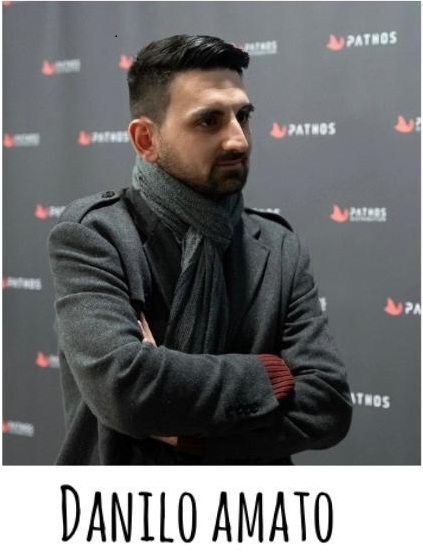
Danilo Amato is a director and writer based in Rome. He graduated in Theatre, Cinema, Dance, and Digital Arts from Sapienza University of Rome. He further refined his skills through advanced training programs in cinematography, screenwriting, and directing, including courses at the Centro Sperimentale di Cinematografia and SHOT Academy. He worked as an assistant director on film and television productions, and since 2024 he has been working as an audiovisual distributor with Pathos Distribution. Alongside his professional activity, he has written and directed several short films and music videos, including Earthrise (2018) and Quella strana brevissima morte (2024), as well as co-wrote and co-directed the short film Debugging (2025). He is also the author of the film essay Il cinema dei fratelli Nolan.
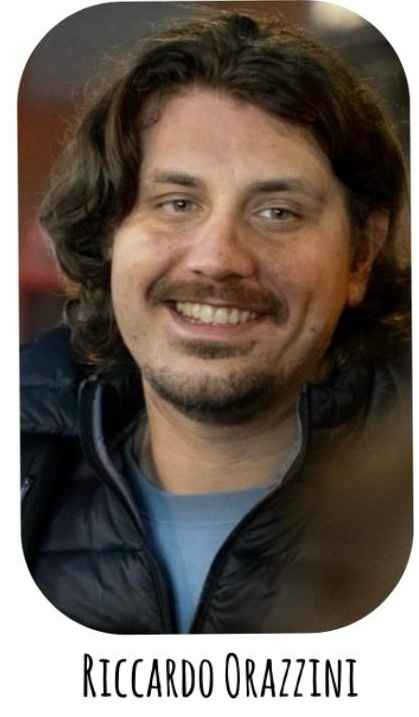
Riccardo Orazzini (born in Pisa, 1995) is a writer and director. He holds a degree in Performing Arts from the University of Pisa. Moreover, completed a master’s program in Narrative Arts at IULM University in Milan. Also taking part in the Showrunner Lab in Prato, where he focused on film, theatre, and serial storytelling.
He later moved to Rome, where he began working on film and television sets in the production department. In 2019, he wrote the story and screenplay for the short film Colpevoli, directed by Edoardo Paoli. In 2020, he won the VIVIAMADESIDERA Writers for Theatre award with his monologue Bussola.
In 2023, he wrote La Fuga, performed by Giacomo Poretti and Daniela Cristofori and later published by Edizioni Ares. In 2025, he co-wrote and co-directed the short film Debugging, which won the Best Direction award at the 48 Hour Film Project, presented by two-time Academy Award winner Paul Haggis. He is currently in post-production on his new short film Spit It Out.
Rest of the crew
Script Supervisor : Alice Cardarello @alicecardarello
Editor/ Post Production : Federico Testini @federico_testini
DOP: Adriano Cuccharini @_thisisfuco_
Co-producer Federico Pallocci @federicopallocci
Production Manager: Vittoria Chiavazzo @vitty_ch
Assistant Production Manager @_beatrice.spada_
Facilities Manager: Giovanni Andrea Bayslak @_giovanni_andrea_bayslak_
Assistant Facilities: Lorenzo Fabrizio @lorenzofabrizioo_
Runners : Giuseppe Brignoli @brignoli.giuseppe, Marco De Nobili @marcoaugustodenobili
Focus puller: Giacomo Zacchia @giacomo_zacchia
Gaffer: Alessandro Baroli @alessandro_baroli
Electrician : Giorgio Chiucchi @giorgio
Backstage: Lorenzo Raffanelli @lorenzoraffanelli
Assistant Backstage @elenaposati
Production Designer: Giovanna Melchionda @giaoma89
Set designer: Chiara Sileno @silenoconlaesse
Costume Designer: Vanessa Carboni @vanessacarboni00
Makeup Artist: Claudia Prandini @claudiaprandini_mua
Hair Stylist: Federica Valtolina @federica_ginger_valtolina
Sound Design: Mirko Porta @pigreko_
Sound Mixer: Mirko Porta @pigreko_
Boom Operator: Christian Rapisarda @rapisarda_christian
Social Media Manager: Lorenzo Mastrantoni @lorenzomastrantoni_
Graphic Designer : Meltem Eti Proto @metiproto, Federico Testini @federico_testini
Post Production : @federico_testini
Location : La Casa dei Giovani
Site Representative : Francesco Tabarrini @fra_ncesco._
Special Thanks to @cassandra.associazione